Jafron Featured in the "Business for Good Case Collection 2025" Officially Released at the Asia Philanthropy Forum
Author:Liz Date:2025-12-12
On November 30, Jafron Biomedical’s philanthropic practice was selected for inclusion in the Business for Good Case Collection 2025, which was officially released during the closing ceremony of the 2025 Asia Philanthropy Forum.
This year’s forum, held under the guidance of China NGO Network for International Exchanges, was co-organized by THE ASIA ACADEMY OF PHILANTHROPY together with several partner institutions. The event brought together over 600 participants — including government representatives, leaders of international organizations, philanthropists, business leaders, and scholars from 16 countries and regions — in Boao to discuss the future of philanthropy in Asia and to jointly address global sustainable development challenges. The forum also attracted more than 900,000 online viewers.
The case collection was jointly compiled by Yueer Philanthropy, CEIBS Centre for Wealth Management and THE ASIA ACADEMY OF PHILANTHROPY. It aims to present representative and forward-thinking examples of how Chinese enterprises are advancing the concept of “Business for Good” through practical, high-impact initiatives.
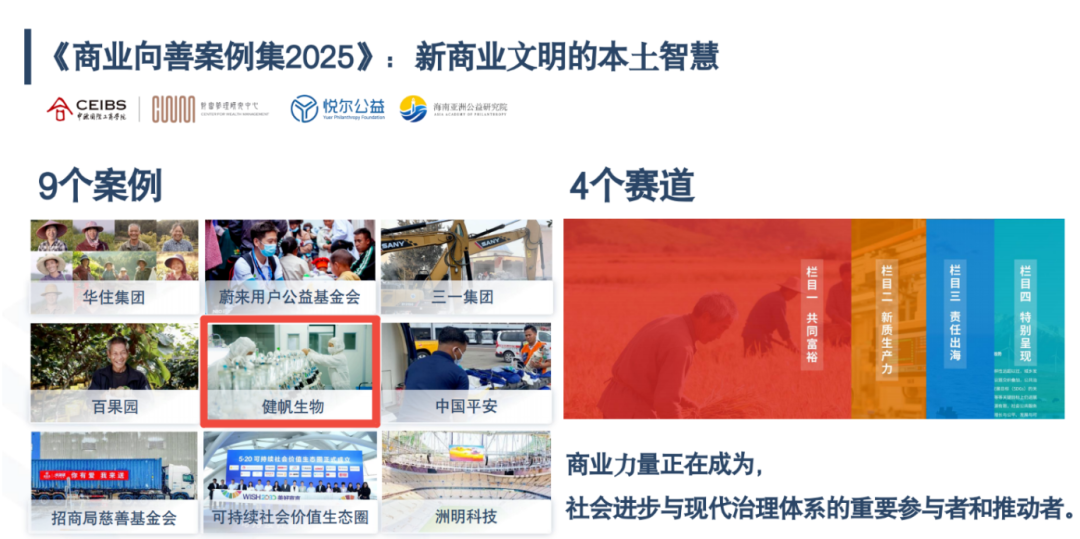
*Common Prosperity, New Quality Productive Forces, Responsible Global Expansion, and Special Features — and includes nine representative Business for Good cases in total.
Jafron’s case highlights more than twenty years of its “responsibility evolution”, illustrating how the company—starting from independent innovation in blood purification—broke foreign technological monopolies and expanded access to advanced medical treatment. Through payment innovation, capacity building in primary healthcare, and coordinated development across the industrial value chain, Jafron has made high-quality technologies more accessible.
Beyond technological advancement, Jafron initiated the “919 ESRD Day”, fostering broader public awareness and social consensus. Together, these efforts form a holistic “Business for Good” model characterized by a cycle of original innovation → technology accessibility → social advocacy.
This case demonstrates how a Chinese medical technology enterprise can leverage core technologies to enhance social wellbeing, fulfilling the dual mission of saving lives and advancing industry—a compelling example of a Chinese pathway to synergizing medical innovation and social value.
The inclusion of this case represents a recognition of Jafron’s long-standing practice of “doing good with core capabilities” and affirms its contributions to both business and philanthropy.
Below is the full case content for sharing:
Jafron Biomedical:
The Responsible Evolution of a Medical Device Company
Founded in 2002, Jafron Biomedical Co., Ltd. is a publicly listed company specializing in the research, development, manufacturing, and sales of advanced biomaterials and high-end medical devices. For more than two decades, Jafron has upheld technological innovation as its core driving force, continuously transforming cutting-edge scientific achievements into accessible medical solutions.
Through standard-setting, the company has helped shape industry norms, while building a multidimensional shared-value chain that connects patients, hospitals, enterprises, and the broader healthcare ecosystem. Jafron has explored a development path that integrates both social and economic value—offering a meaningful reference model for China’s medical device sector.
Against the backdrop of Healthy China and the rise of new quality productive forces, Jafron’s journey is emblematic. It demonstrates how technological self-reliance can align with social welfare, and how innovation—supported by favorable policies and scientific momentum—can simultaneously serve the mission of saving lives and advancing industry. It stands as a vivid Chinese example of how technological breakthroughs can reshape and amplify social value.
This study uses Jafron as a case example to illustrate three layers of “technology for good” in the practice of new quality productive forces.
01. China’s Medical Dilemma Under Technological Monopoly
Over twenty years ago, long-standing monopolies in advanced medical technologies not only left Chinese patients with limited treatment options but also placed Chinese companies at a developmental disadvantage.
Before 2002, patients with end-stage renal disease in China faced a dual challenge:
Conventional dialysis was relatively affordable but incapable of removing middle to large molecule toxins, leading to high complication rates.
Meanwhile, advanced blood purification technologies were monopolized by Western companies, and the high costs made them accessible only to a small portion of patients.
At the same time, China’s medical device industry was constrained by a “copy-over-innovate” pattern. Domestic companies attempting to develop hemoadsorption technologies confronted multiple barriers—patent restrictions imposed by Western firms, long and demanding clinical validation cycles, and physicians’ caution toward domestic technologies.
In those early years, Jafron was still a start-up, and annual sales of its self-developed hemoadsorption cartridges were only around 2,000 units.
02. Three Dimensions of Technology for Good:Original Innovation, Accessibility, and Advocacy
A 20-Year Breakthrough: From Technological Barriers to Clinical Recognition
Jafron recognized that technological autonomy was not only essential for giving Chinese patients a better chance at survival but also foundational for the long-term growth of China’s healthcare industry. The company therefore focused on the unmet needs in domestic hemoadsorption technology, deliberately choosing the more challenging path of original innovation, rather than following the prevailing plasma-separation approach.
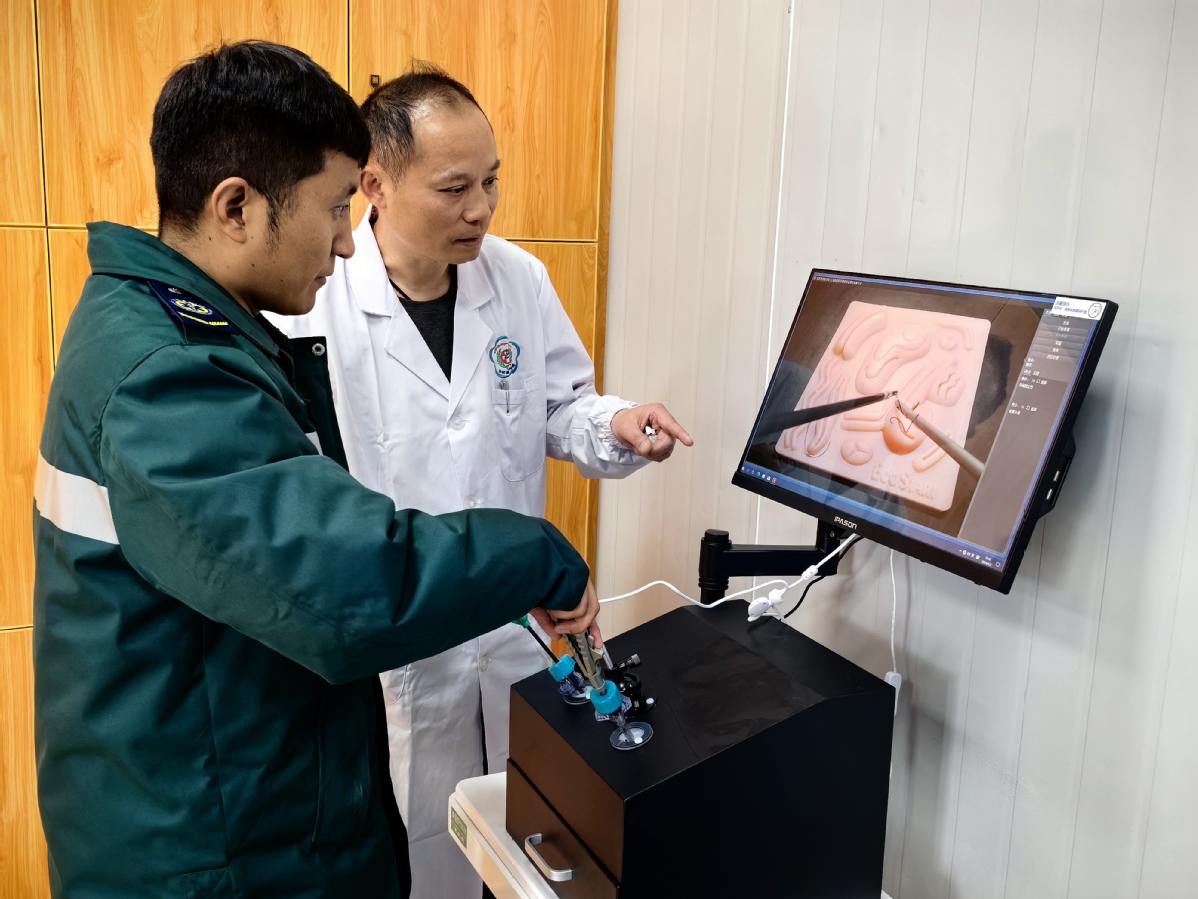
In 2004, leveraging the “resin hemoadsorption” technology co-developed with Nankai University, Jafron launched HA130, the world’s first hemoadsorption cartridge designed specifically for uremic patients. This innovation broke the long-standing limitation that hemoadsorption was used mainly for acute poisoning emergencies.
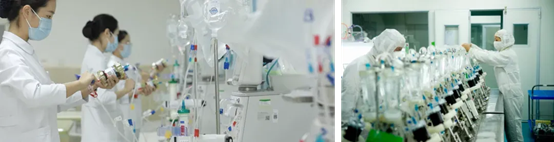
More importantly, Jafron reduced the per-treatment cost to one-third of imported products, significantly improving affordability. HA130 soon gained widespread clinical recognition and has since been adopted by over 8,000 hospitals worldwide.
As Jafron puts it, “Technological innovation means being one inch wide but one kilometer deep.” For more than twenty years, the company has remained focused on blood purification—driven by social value, strengthened by technological depth, and guided by clinical needs. Through original innovation, it has achieved both cost efficiency and quality improvement, breaking through the barriers of a high-tech field once dominated by foreign firms.

*Jafron Biomedical’s independently developed and globally pioneering hemoadsorption technology
Technology Accessibility: Payment Innovation, Capacity Building, and Supply Coordination
After breaking through technological and clinical barriers, Jafron Biomedical encountered a new challenge: the “pyramid dilemma” in blood purification. This refers to the structural imbalance in the allocation of medical resources, where high-end resources are over-concentrated in top-tier hospitals in major cities, while community hospitals and county-level medical institutions in underserved regions remain chronically resource-poor. As an industry leader, Jafron sought to address this issue by promoting technology accessibility through payment innovation, capacity building, and supply coordination.
Payment Innovation
Jafron launched the “Aiduoduo·Kidney Care Mutual Assistance Program”, allowing low-income, high-risk, and vulnerable patients to obtain insurance coverage even with pre-existing conditions. The “Flowing Love” initiative provides financial assistance to low-income uremic patients.
At the same time, through technological innovation and industrial upgrades, the company proactively lowered the price of single-use hemoadsorption cartridges, enabling more patients to access high-quality treatment. Meanwhile, national healthcare policies reinforced these efforts, standardizing blood purification billing items and introducing new dialysis–hemoperfusion service fee guidelines.
The combination of government policy reform and corporate action ensures that the value of advanced technology truly benefits patients.
Capacity Building
Following the philosophy of “Strengthen the foundation, enhance technology, and empower intelligently”, Jafron has long supported the improvement of medical care in underdeveloped regions such as Tibet and Guizhou. By addressing gaps in talent, equipment, and technology, the company has helped expand access to blood purification treatment in grassroots healthcare institutions:
Donated CNY 2.5 million in Tibet and provided free cataract surgeries.
Built the “Three-Basics Training Room” in Milin City and trained local healthcare professionals.
Donated over CNY 8.7 million in cash and medical supplies to grassroots medical systems in Guizhou, supporting patient care, medical exchanges, and the establishment of intelligent medical management systems.

*Established the ‘Three-Basics Training Room’ in Milin City for training medical staff
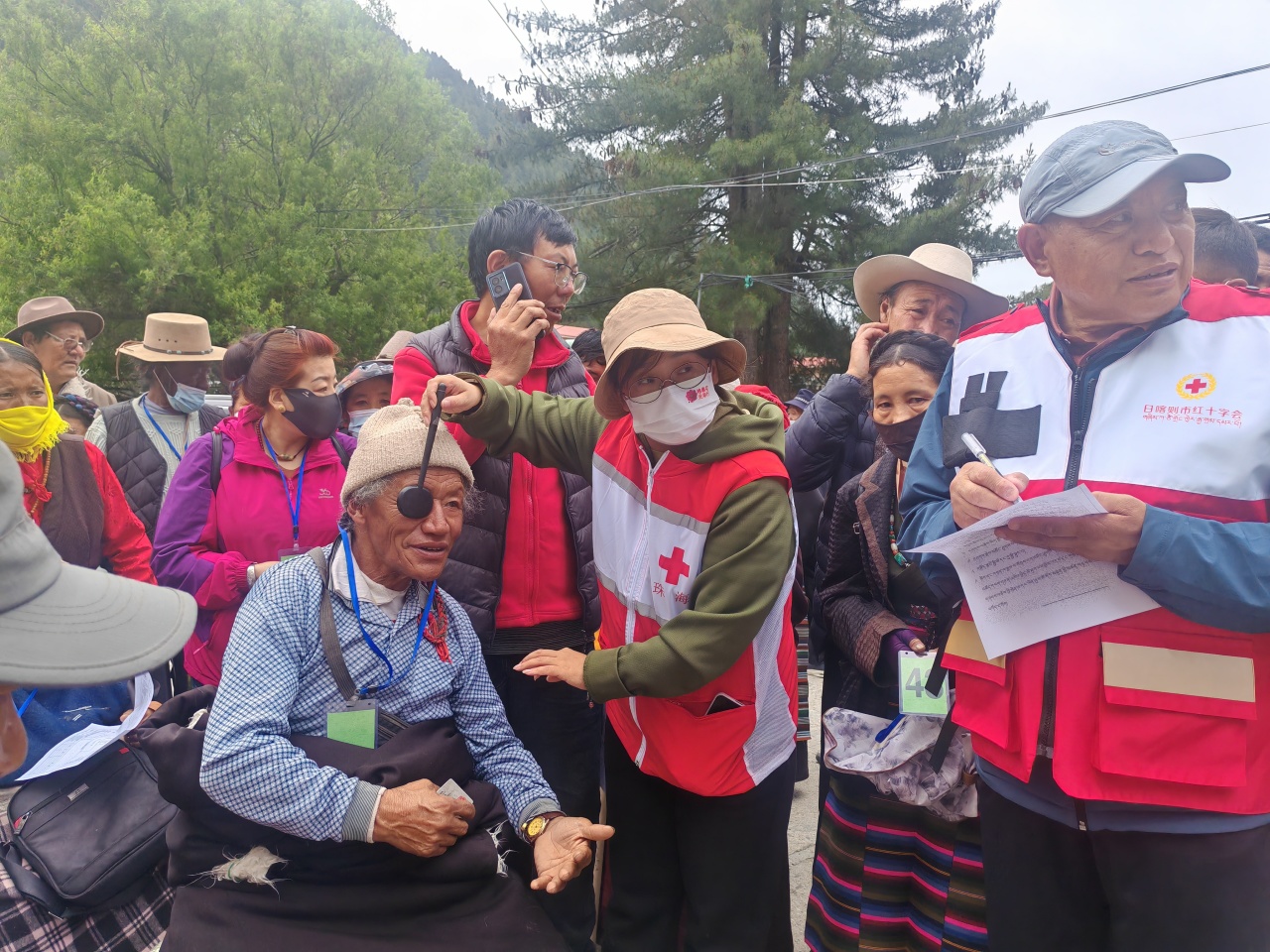
*The ‘Guangming Gesanghua’ Project: Free Vision Screening and Cataract Surgery
Supply Coordination
Leveraging years of accumulated technology, experience, and clinical data, Jafron has led more than 30 domestic and international companies to form a complete industry chain, spanning resin material development to clinical application. The company has also actively contributed to drafting multiple clinical guidelines, including:
Clinical Guidelines for the Use of Disposable Hemoperfusion Cartridges
Disposable Hemoperfusion Cartridges
Clinical Guidelines for Extracorporeal Circuits in Blood Purification Devices
Jafron’s products have been cited in over 1,000 publications (nearly 30% in English), effectively promoting the standardization of blood purification therapy in China.
Building Social Consensus: The “919 ESRD Day” Initiative
Jafron also recognized the gap in disease awareness, psychological support, and social care for patients with chronic kidney disease.
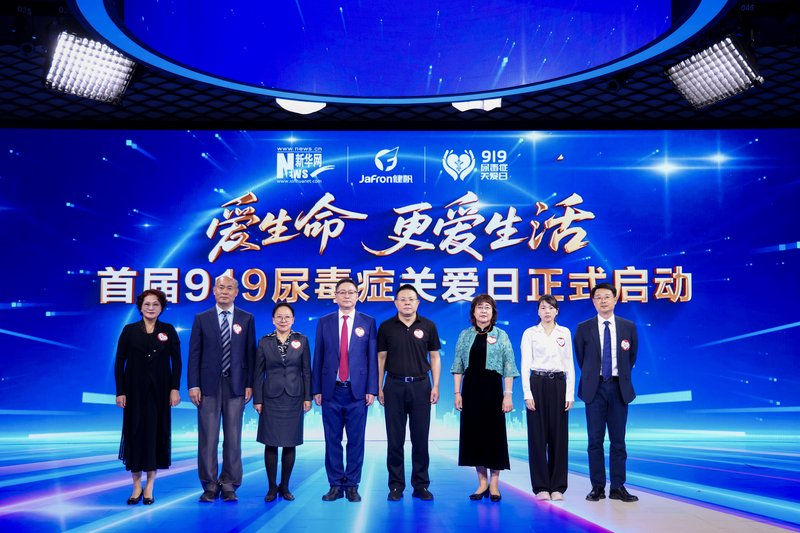
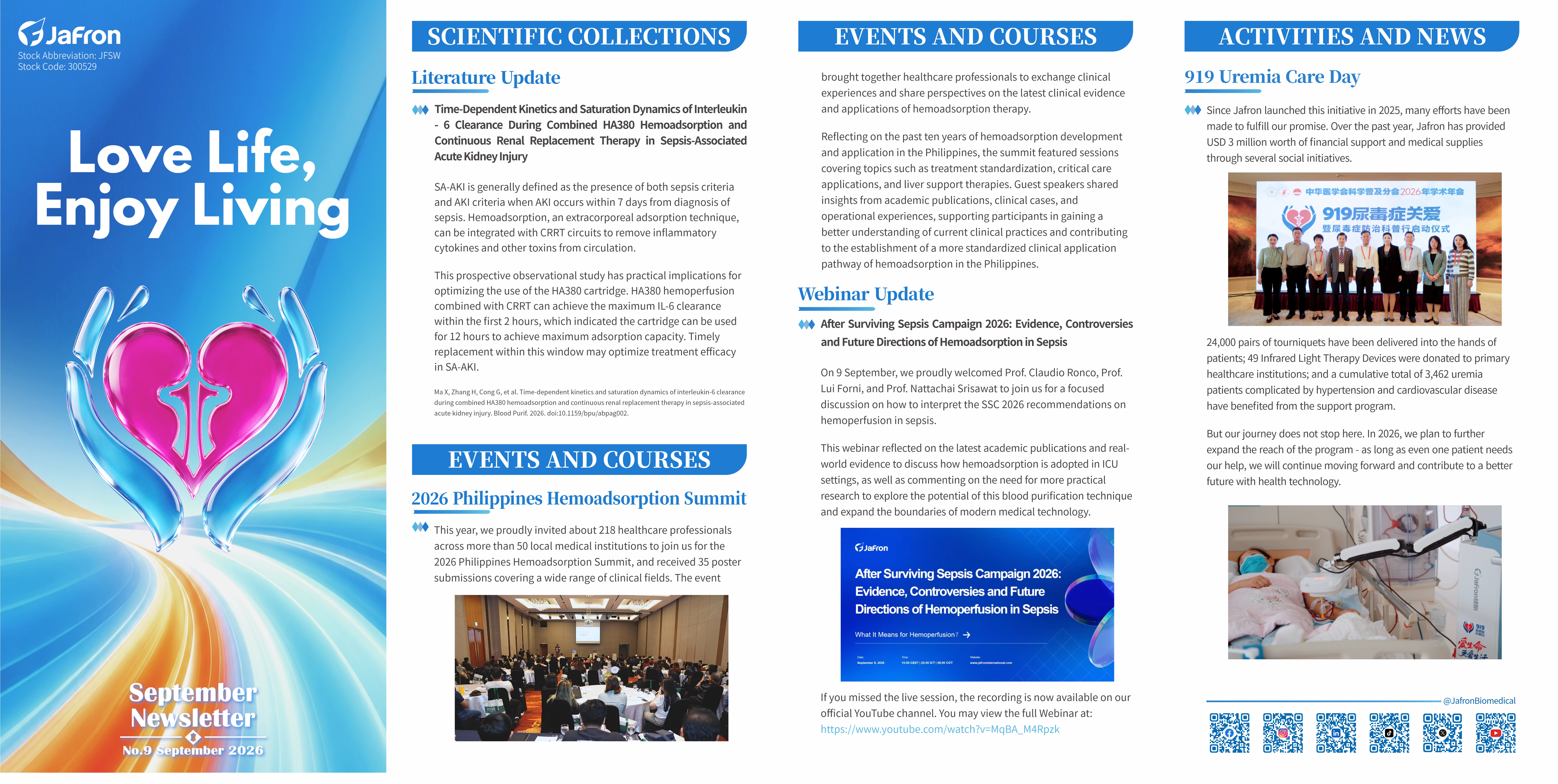
On September 19, 2025, Jafron, in partnership with Xinhua News Agency, launched the “919 ESRD Day” public welfare initiative under the theme “Love Life, Enjoying Living”, calling on society to pay attention to this long-overlooked chronic disease population.
Through mainstream media campaigns, charitable programs, and advocacy for healthcare policy, the initiative extended the impact of technology accessibility into societal accessibility, enhancing public health awareness, patient support systems, and healthcare accessibility.
The “919 ESRD Day” is more than a charitable event—it translates over twenty years of corporate scientific achievements into a national-level initiative, shaping public discourse and social consensus. It forms a self-reinforcing “Business for Good” cycle of scientific innovation → medical accessibility → social advocacy, elevating blood purification from a technical innovation to a societal issue tied to human dignity and social responsibility.

*Launch of the “919 ESRD Day” Public Welfare Initiative
03 Core Insights
Technology for Good and Public Value Creation
Through independent research and development, Jafron Biomedical broke international technological monopolies, achieving not only corporate-level innovation breakthroughs but also restructuring the relationship between technology, accessibility, and equity within the healthcare system.
This exemplifies the logic of “technology for good”: corporate innovation is not merely a tool for market competition, but can serve as a form of public value creation. By combining original technological development, cost reduction and efficiency improvement, and clinical dissemination, Jafron has transformed technological dividends into structural forces for social equity—creating a symbiotic win-win between economic returns and societal benefits through an innovative value chain.
Co-Creation of Social Value
Through the three-pronged approach of payment innovation, capacity building, and supply coordination, Jafron has established a multi-layered protective system integrating health insurance, commercial insurance, and public welfare programs.
This reflects the logic of “institutional embedding”: by reallocating financial, institutional, and other resources, the company integrates itself into the public service system, enhancing the resilience and self-governance of social systems. This approach moves beyond traditional CSR’s “external compensation” mindset, embodying a co-creation logic of social value, where corporate actions contribute systematically to social governance.
Social Value Synergy and Public Agenda Shaping
The establishment of “919 ESRD Day” has transformed Jafron from a medical device company into an advocate for social health issues. By mobilizing government, media, and public welfare organizations, the company has converted its long-term technological achievements and clinical expertise into public health awareness and social care systems.
This demonstrates the logic of “social value synergy”: the enterprise is no longer merely a market participant, but a shaper of public agendas and builder of social consensus. Its impact lies in elevating individual patient issues into structural societal concerns, forming a self-reinforcing cycle of scientific innovation → medical accessibility → social advocacy, which generates sustainable social influence with cultural depth and institutional effectiveness.
Conclusion
From breaking foreign monopolies and achieving independent development of key medical technologies, to promoting technology accessibility through payment system innovation, grassroots capacity building, and industrial coordination, and finally transforming scientific achievements into social consensus via “919 ESRD Day”, Jafron has accomplished a structural leap from treating individuals to repairing systems.
Its practice of Business for Good reveals a new development logic: true social progress depends not only on resource input, but on a company’s ability to coordinate technology, institutional mechanisms, and societal engagement to build sustainable social resilience.
In this process, business is no longer an “external rescuer” of social problems, but a participant in institutional innovation and co-creation of public value. Jafron has bridged the “last mile” of healthcare equity, while giving the traditional mission of “serving the nation through industry” a modern interpretation oriented toward public wellbeing. For developing economies, this “structural-for-good” Chinese pathway provides a sustainable development model combining technological capability, institutional flexibility, and social consensus.